Strategic oil reserves explained, and why China holds the largest
Emergency oil stocks were built to survive a supply cut. In 2026 the world is using them, and China's are now the largest.
In 30 seconds
- A strategic petroleum reserve is oil a country stores for emergencies. IEA members must hold stocks equal to at least 90 days of net imports, a rule written after the 1973 oil crisis.
- The US reserve can hold 714 million barrels but held about 283 million in late October 2026, after the 2022 sales and a 2026 emergency release.
- China publishes no stock data. The US EIA estimates China held nearly 1.4 billion barrels at the end of 2025, a buffer against its dependence on imports through the Strait of Hormuz.
A strategic petroleum reserve is crude oil, and sometimes fuel, that a country keeps in storage so it can keep refineries running if imports are cut off. It is insurance. For most of its history the insurance sat unused. In 2026, with tanker traffic through the Strait of Hormuz disrupted since the war with Iran began at the end of February, governments are drawing on it at a scale never seen before.
Why reserves exist
Modern oil reserves are a product of the 1973–74 crisis. Arab members of the Organization of the Petroleum Exporting Countries (OPEC) cut off oil exports to the United States in response to American support for Israel during the Yom Kippur War, and the shock to the economy pushed Washington to create its own reserve [2]. Consuming countries founded the International Energy Agency (IEA) in 1974 for the same reason [1].
The IEA’s central rule is simple: each member must hold oil stocks equal to at least 90 days of its net oil imports, and be ready to release them together in a severe disruption [1]. Countries meet the rule in different ways. The United States relies on government stocks. Japan and South Korea combine government stocks with legal minimums that refiners and importers must hold. France, Italy and Spain use dedicated stockholding agencies alongside industry stocks [1].
The US reserve
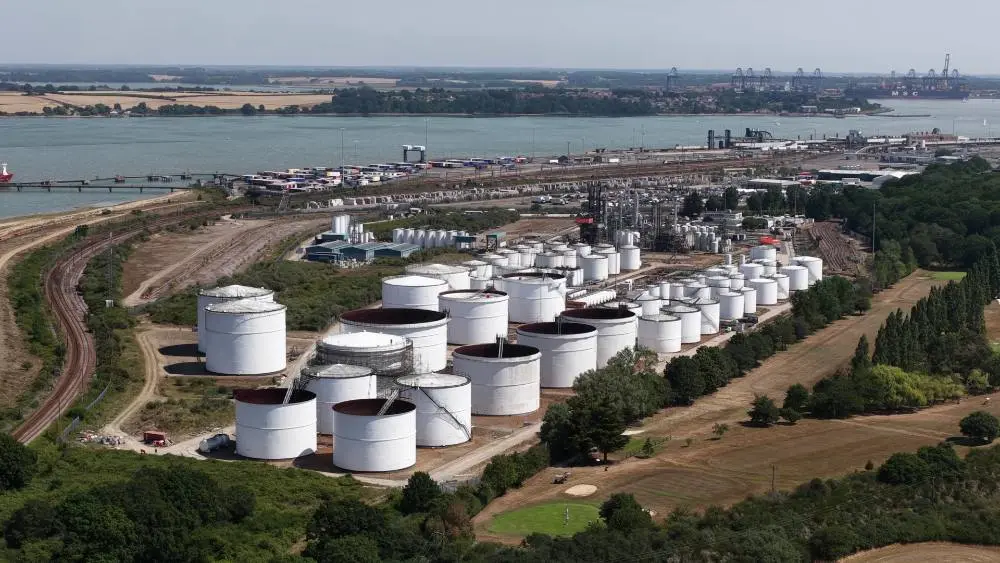
President Gerald Ford signed the law creating the US Strategic Petroleum Reserve (SPR) on 22 December 1975, and the first oil arrived on 21 July 1977 [2]. The oil sits in underground salt caverns at four sites on the Gulf Coast, with an authorized capacity of 714 million barrels [3].
The reserve has been shrinking for several years. After Russia’s invasion of Ukraine, President Joe Biden authorized the release of up to 180 million barrels on 31 March 2022, which the Department of Energy called a “wartime bridge” [4]. In March 2026 the United States committed 172 million barrels to an IEA collective release of 400 million barrels, structured as an exchange: companies must later return the oil plus extra barrels [3]. By the week ending 23 October 2026 the SPR held 282.6 million barrels [5], about 40% of capacity and the lowest level since 1982 [6].
China’s stockpile
China publishes no figures for its oil stocks. Every number below is an estimate built from official import, production and refinery data, or from satellite and shipping tracking.
The most authoritative outside estimate comes from the US Energy Information Administration (EIA). It put China’s strategic inventories at nearly 1.4 billion barrels in December 2025: about 360 million barrels held by the government and about 1 billion in commercial tanks, including at refineries [7]. The EIA counts China’s commercial stocks as strategic because state oil companies were reportedly told in 2024 to hold emergency oil in them. By its estimate China added an average of 1.1 million barrels a day (b/d) to storage in 2025 [7]. On that basis China holds the world’s largest emergency stockpile, ahead of the United States and Japan.
Policy and construction point the same way. Since late 2023 Beijing has issued unpublicized orders for state firms to stockpile, and state companies including Sinopec and CNOOC planned at least 169 million barrels of new storage across 11 sites in 2025 and 2026, according to Reuters [8]. China’s first Energy Law, in force since 1 January 2025 [9], puts government and commercial stocks under one definition of national reserves [8]. An industry federation has said state capacity should exceed 1 billion barrels, and two trade sources told Reuters the aim is six months of imports, roughly 2 billion barrels [8].
Why? The plainest explanation is dependence. China imports most of the crude its refineries use, and June Goh of Sparta Commodities described the goal as “sufficient energy security” for a heavily import-dependent nation [10].
The stockpile has since been tested. Even after the Gulf war began, China added an estimated 1.16 million b/d to storage between January and April 2026, according to Reuters columnist Clyde Russell’s calculations [11]. Draws began in May [12]. In September China used an estimated 530,000 b/d more crude than it imported and produced, but across January to September it still added a net 240,000 b/d [13].
China’s reserve is now large enough that its decisions to buy or draw can move the world price, yet outsiders can only infer them after the fact.
Why it matters for prices and Hormuz
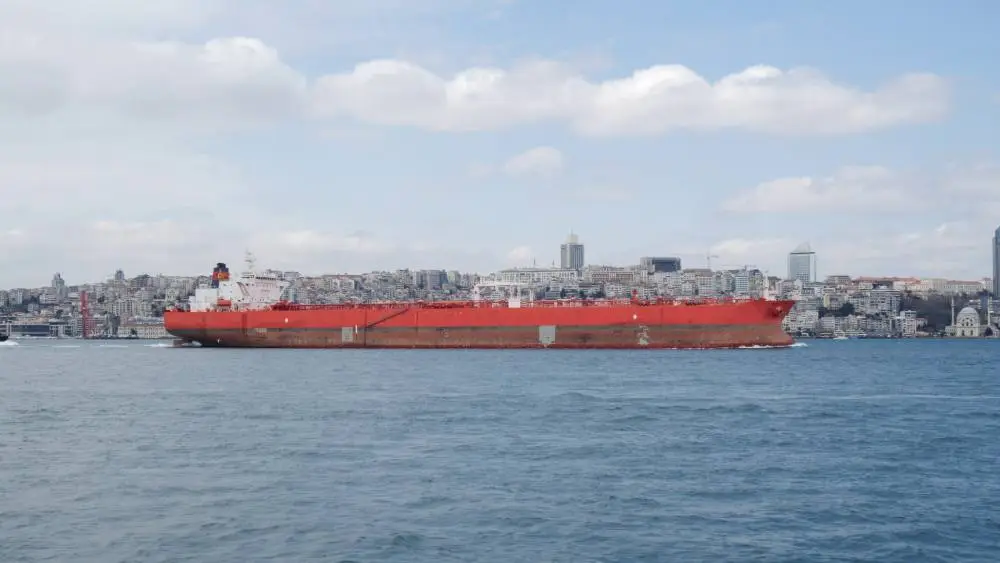
In 2024 about 20 million b/d of oil passed through the Strait of Hormuz, roughly one-fifth of global consumption and more than a quarter of seaborne oil trade [14]. Asia took 84% of the crude and condensate, and China, India, Japan and South Korea together took 69% of the Asia-bound flow. Saudi and Emirati pipelines could reroute only about 2.6 million b/d [14]. That is why the Hormuz disruption hit Asian importers hardest, and why stocks matter: they are the only fast substitute for oil that cannot get out.
Analysts disagree about what China’s reserve does to the market. Robin Mills of Qamar Energy argues China has become a stabiliser: its 2025 buying absorbed surplus oil that would otherwise have pushed prices lower, and its 2026 drawdowns cushioned the shock. He lists other possible motives that analysts discuss, from hedging against sanctions to simply buying cheap oil. He warns this cannot last if the Gulf stays blocked, and that the opacity of Chinese data is a blind spot for markets [15]. Others stress the uncertainty. Sumit Ritolia of Kpler said in June that some use of the state reserve could not be ruled out, a reminder that even close observers do not know which tanks are being drawn [16]. Brent crude, the international benchmark, peaked at $126.41 a barrel on 30 April 2026 [13].
What it means for other importers
Japan holds the deepest buffer among big Asian importers. As of March 2026 its stocks equalled 233 days of supply by Japan’s own measure: 146 days held by the government, 81 by companies and six in joint storage with producer countries [17]. It still began releasing government crude on 26 March 2026, with a second release from early May [17].
South Korea held about 100.1 million barrels in government-controlled reserves before announcing a record release of 22.46 million barrels in March 2026, according to S&P Global calculations from state oil company data [18].
India, which is not an IEA member, is far more exposed. Its strategic caverns at Visakhapatnam, Mangaluru and Padur can hold 5.33 million tonnes, about 9.5 days of supply. They were about 64% full in March 2026, the government told parliament [19].
For these countries, a large Chinese reserve cuts both ways. When China draws on its tanks instead of bidding for scarce cargoes, more oil is left for everyone else. When it refills, it competes for the same barrels.
What to watch
- Every Wednesday: the EIA’s Weekly Petroleum Status Report shows whether the US reserve is still falling; the next is due on 4 November 2026.
- Mid-November 2026: China’s October customs and refinery data, which analysts use to estimate whether China is drawing on or rebuilding its stocks.
- Return of US exchange barrels: the oil lent from the SPR in 2026 must be repaid with a premium, and the schedule will shape US buying.
- Hormuz shipping: whether regular tanker transits resume, the single biggest factor in how long importers must keep drawing on their reserves.
Sources
Publications
- Oil security — International Energy Agency, accessed 3 November 2026
- SPR Origins — US Department of Energy, accessed 3 November 2026
- DOE has released 17.5 million barrels from the Strategic Petroleum Reserve since March — US Energy Information Administration, Today in Energy, 30 April 2026
- DOE Announces Notice of Sale of Additional Crude Oil From the Strategic Petroleum Reserve — US Department of Energy, 19 September 2022
- Weekly Petroleum Status Report: highlights — US Energy Information Administration, data for week ending 23 October 2026, p. Stocks table
- China, the United States, and Japan hold most strategic oil inventories in 2025 — US Energy Information Administration, Today in Energy, 20 April 2026
- Amid regional conflict, the Strait of Hormuz remains critical oil chokepoint — US Energy Information Administration, Today in Energy, 16 June 2025
- Update on oil and gas security (Japan) — Yoshiomi Yoshino, Ministry of Economy, Trade and Industry, presentation to APERC, 9 June 2026
News
- Oil stocks in US Strategic Petroleum Reserve fall to lowest level since 1982 — Reuters, via BOE Report, 5 October 2026
- China accelerates oil reserve site build amid stockpiling drive — Reuters, via The Standard (Hong Kong), 7 October 2025
- Energy Law of the People's Republic of China (legislative record) — NPC Observer, accessed 3 November 2026
- China kept building its crude stockpile in April despite Iran crisis — Clyde Russell, Reuters, via The Star, 22 May 2026
- China taps commercial oil stockpiles to help weather Gulf shock — Bloomberg, via Energy Connects, 10 June 2026
- China uses crude stockpiles, but rising oil imports may curtail draws — Clyde Russell, Reuters, via The Star, 22 October 2026
- South Korea to release record 22.46 million barrels of oil reserves in emergency action — S&P Global Energy, 11 March 2026
- India's strategic oil reserves at 64% capacity, says government — Telangana Today (reporting a written reply in the Rajya Sabha by Suresh Gopi, Minister of State for Petroleum and Natural Gas), 23 March 2026
Analysts & newsmakers
- Says China's stockbuilding is about energy security for an import-dependent country — June Goh, Sparta Commodities, quoted by Reuters, 7 October 2025
- Argues China has turned from a destabilising force into a stabiliser of oil markets, but that this cannot last indefinitely — Robin Mills, chief executive, Qamar Energy, column in The National, 1 June 2026
- Says some use of China's state reserve cannot be ruled out — Sumit Ritolia, lead analyst, Kpler, quoted by Bloomberg, 10 June 2026
How this was made. Researched and drafted with AI assistance from primary documents and named reporting, then verified and approved by our editor, Fawad Rizvi. Every source is listed above. Spotted an error? Tell us.