America taxed sending money home. The money kept coming.
A tax meant to slow transfers arrived alongside more of them. What happened, and who ends up paying.
 Watch the documentary · Premieres soon
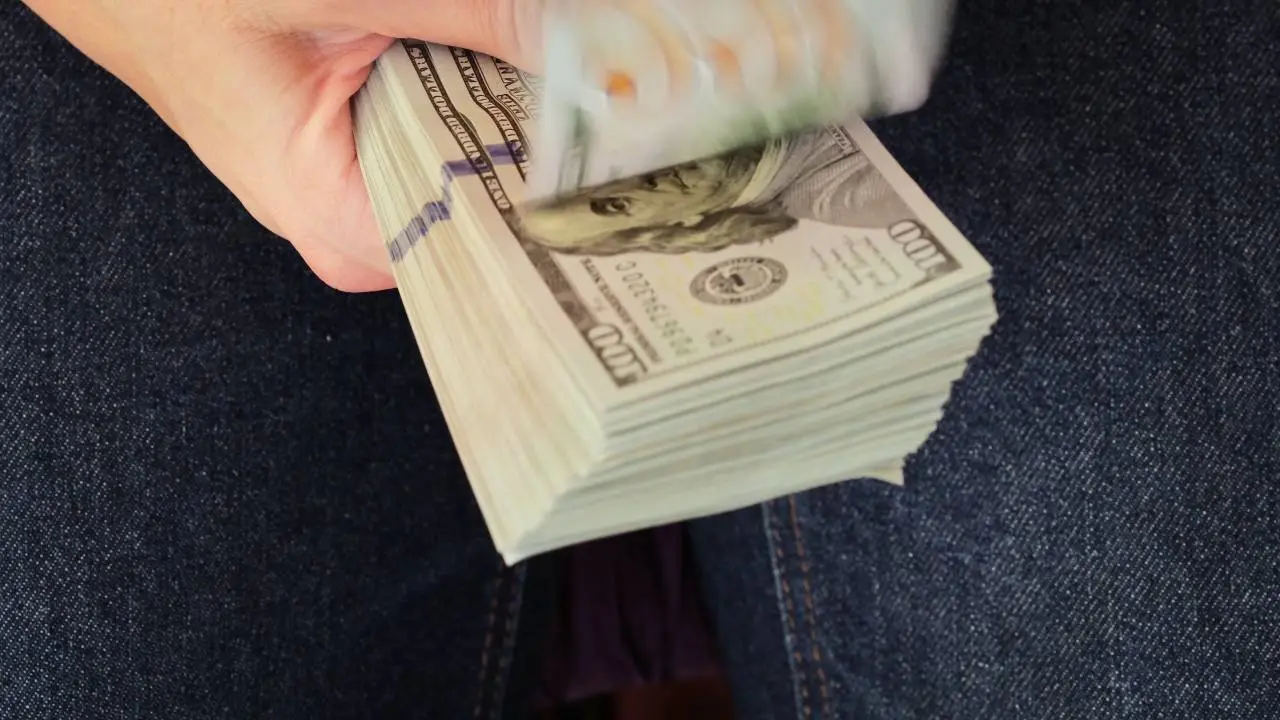
Hands counting a stack of US dollar bills. Photo: Storyblocks.
In 30 seconds
- A 1% US tax on remittances sent in cash, money orders and similar instruments took effect on 1 January 2026.
- Remittances to Mexico rose 1.4% in the first quarter of 2026 after a year of declines; Pakistan's inflows reached a record for its fiscal year to June 2026.
- The film follows four corridors: Mexico, Central America, India and Pakistan.
Something strange is happening to the money people send home.
On 1 January 2026, the United States began charging a 1% tax on remittances sent out of the country in cash and similar instruments. Supporters described it as a modest charge on a very large flow of money. Critics expected it to push transfers down, or into channels the government can’t see.
Then the first-quarter figures arrived. Money sent to Mexico, one of the world’s largest remittance corridors, rose 1.4% on a year earlier, ending a year of declines. Pakistan went on to report record inflows for its fiscal year. A tax designed to make sending money home a little harder had arrived alongside more of it, not less.
It started with one decision. We trace it from the room where it was made to the people who live with it.
The case for the tax
The film gives the policy its strongest defence, in the words of its supporters, including analysts at the Heritage Foundation, with each quote credited on screen.
The full investigation
The complete written investigation, with charts and the numbered source list from the film, publishes here on premiere day. Every figure is checked against the central banks’ own releases before publication.
How this was made. Researched and drafted with AI assistance from primary documents and named reporting, then verified and approved by our editor, Fawad Rizvi. Every source is listed above. Spotted an error? Tell us.